Head-to-Head Aerospace Analysis
Falcon 9 vs. Electron
Commercial Rideshare Heavyweight vs. Dedicated Smallsat Precision Launcher
Falcon 9 and Rocket Lab's Electron occupy completely different market tiers in modern launch operations. Falcon 9 is a medium-to-heavy workhorse that aggregates dozens of small satellites into bulk Sun-Synchronous Orbit (SSO) rideshare missions (SpaceX Transporter series). Electron is an agile small-satellite launcher built from carbon composite materials, powered by 3D-printed electric-turbopump engines, and dedicated to placing individual payloads into precise, custom orbital planes on demand.
Key Architectural Takeaways
01
Falcon 9 is a medium-heavy vehicle lifting up to 22,800 kg to LEO; Electron is a dedicated smallsat launcher designed for payloads up to 300 kg.
02
Electron provides bespoke orbital insertion: customers choose their exact launch time, orbital inclination, and altitude without waiting for rideshare compromises.
03
Electron uses 3D-printed Rutherford engines with battery-powered electric turbopumps; Falcon 9 uses traditional gas-generator turbopump Merlin 1D engines.
04
Falcon 9 rideshare offers lower cost-per-kg (~$5,000–$6,500/kg on Transporter), while Electron offers mission independence and custom orbital insertion at ~$25,000–$30,000/kg ($7.5M dedicated).
CAD Scale & Performance Blueprint
Falcon 9 vs Electron — Structural & Payload Envelope
Falcon 9Electron
Technical Specification Matrix
Direct engineering comparison across structural mass, payload capacity, propulsion, and pricing.
| Specification Matrix | 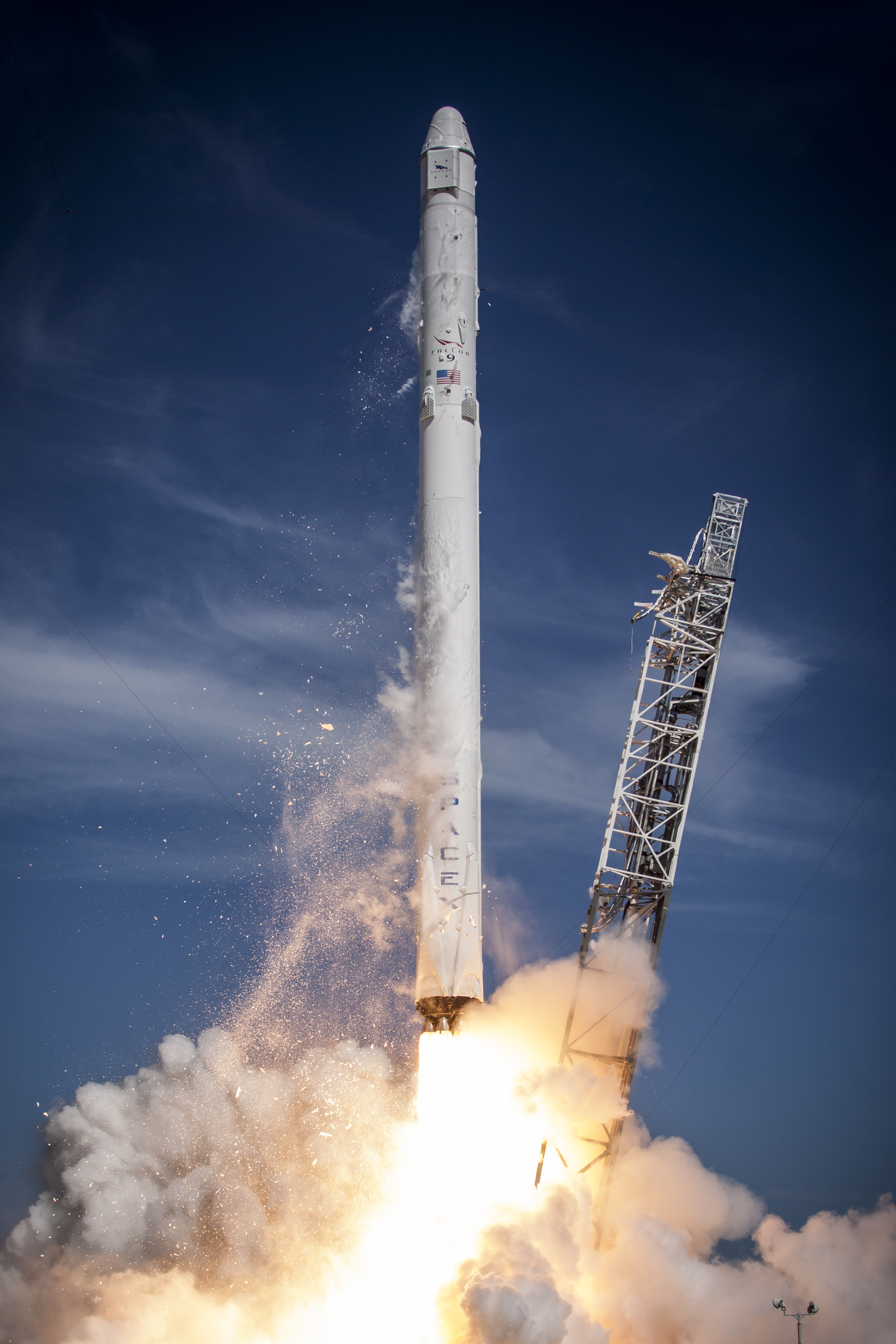 |  RL |
|---|---|---|
| Status | Operational | Operational |
| Height (m) | 70 | 18 |
| Diameter (m) | 3.7 | 1.2 |
| Mass (kg) | 549,054 | 13,000 |
| Stages | 2 | 2 |
| Propellant | Densified LOX / Rocket Grade Kerosene (RP-1) | LOX / RP-1 |
| Payload to LEO (kg) | 22,800★ Best | 320 |
| Payload to GTO (kg) | 8,300★ Best | 0 |
| Fairing Diameter (m) | 5.2★ Best | 1.2 |
| Reusable (first stage) | Yes | Yes |
| Reusable (fairing) | Yes | No |
| Launch Cost (USD) | $67,000,000 | $7,500,000★ Best |
| Cost per kg to LEO | $2,939★ Best | $23,438 |
| Success Rate (%) | 99.5%★ Best | 92.6% |
| First Launch | 2010-06-04 | 2017-05-25 |
| Launch Sites | Cape Canaveral Space Force Station Space Launch Complex 40 (SLC-40), Kennedy Space Center Launch Complex 39A (LC-39A), Vandenberg Space Force Base Space Launch Complex 4E (SLC-4E) | Rocket Lab Launch Complex 1 Pad A / Pad B, Mid-Atlantic Regional Spaceport Launch Complex 2 (LC-2) |
1. Payload Capacity Across Orbital Regimes (LEO, GTO, TLI)
The choice between Falcon 9 and Electron comes down to orbital mechanics vs. payload mass. Falcon 9 rideshare missions deploy dozens of satellites into a single broad orbit (typically 500–550 km Sun-Synchronous Orbit at 97° inclination). Satellites requiring different inclinations, RAAN (Right Ascension of Ascending Node) planes, or altitudes must spend months using onboard electric propulsion to drift to their operational slots. Electron, equipped with its Curie or HyperCurie kick stage, delivers satellites to exact custom orbits, including retrograde orbits, highly elliptical orbits, and translunar trajectories (as demonstrated on NASA's CAPSTONE lunar mission).
2. Propulsion Architecture, Propellants & Specific Impulse (Isp)
Electron features an innovative propulsion architecture: its 9 Rutherford first-stage engines use electric motors powered by high-discharge lithium-polymer batteries to drive the fuel and oxidizer pumps, completely eliminating complex gas-generator turbines. Rutherford engines are 3D-printed via electron beam melting (EBM) in just 24 hours. Falcon 9's 9 Merlin 1D engines use a traditional gas-generator cycle burning RP-1 and LOX, yielding immense thrust (7,607 kN liftoff thrust vs. Electron's 224 kN).
3. Launch Economics, Pricing & Cost-Per-Kilogram
On a pure cost-per-kilogram metric, Falcon 9 rideshare is unbeatable for smallsat operators: a 50 kg satellite can buy a slot on a Falcon 9 Transporter mission for roughly $300,000 to $400,000 (~$6,000–$8,000/kg). A dedicated Electron launch costs approximately $7.5M for up to 300 kg (~$25,000/kg). However, commercial constellation operators often gladly pay Electron's premium to avoid rideshare delays, launch immediately when satellite hardware is ready, and reach dedicated orbital planes that maximize revenue.
4. Reusability Dynamics & Recovery Operational Profiles
Falcon 9 booster reusability is a routine industrial process, with boosters achieving 20+ re-flights with fast turnaround times. Rocket Lab has pioneered recovering Electron first stages via parachute ocean splashdown, successfully retrieving and re-flying individual Rutherford engines to drive down manufacturing bottlenecks.
5. Operational Flight Heritage & Mission Manifests
Falcon 9 is the world's most flown active launcher with hundreds of successful missions. Rocket Lab's Electron is the second most frequently launched American orbital rocket, with over 50 launches, a successful lunar injection (CAPSTONE), and regular missions for the US Space Force, NRO, and commercial constellation operators (Spire, Synspective, BlackSky).
ENGINEERING CONCLUSION // VERDICT
Analytical Comparison Summary
Falcon 9 is the optimal choice for bulk satellite deployment and cost-constrained rideshares. Electron is the premier solution for defense, urgent commercial replenishment, and science missions demanding precision orbital targeting and sovereign launch schedule control.
Other Popular Launch Vehicle Comparisons
Falcon 9 vs. Starship
The Commercial Workhorse vs. Next-Generation Fully Reusable Megastructure
Read comparison
Starship vs. Falcon Heavy
Next-Gen Monolithic Starship vs. Multi-Core Kerolox Heavy Lifter
Read comparison
Ariane 6 vs. Vulcan Centaur
Europe's Sovereign Heavy Launcher vs. America's National Security Workhorse
Read comparison
New Glenn vs. Starship
The Battle of the Commercial Methalox Giants
Read comparison
Starship vs. Space Launch System (SLS)
Commercial Agile Reusability vs. Institutional Deep-Space Power
Read comparison
Falcon 9 vs. New Glenn
The Proven Commercial Workhorse vs. Heavy-Lift Challenger
Read comparison
Atlas V vs. Vulcan Centaur
The Legendary Mission-Assurance Veteran vs. The Modernized Methane Successor
Read comparison