Aerospace Engineering Guides
Technical guides covering orbital mechanics, liquid rocket engine cycles, cryogenic propellants, and launch economics—complete with KaTeX equations, CAD schematics, and vehicle benchmarks.

Rocket Engine Cycles Explained: Full-Flow Staged Combustion vs. Gas Generator & Expander
Liquid rocket engines must inject tens or hundreds of kilograms of cryogenic propellants every second into a main combustion chamber pressurized between 60 and 350 atmospheres. The engineering philosophy chosen to drive those high-pressure propellant turbopumps—whether open gas-generator, closed staged combustion, expander, or electric-pump—dictates engine efficiency, thrust-to-weight ratio, and refurbishment cadence.
Understanding Keplerian Orbital Elements: Semi-Major Axis, Eccentricity, and Inclination
Every unpowered object orbiting Earth or the Sun moves along a conic section defined by two-body gravitational mechanics. Rather than tracking instantaneous 3D Cartesian position and velocity vectors—which change constantly at several kilometers per second—flight dynamics engineers describe an orbit using six Keplerian orbital elements. Five parameters lock the geometric shape and spatial orientation of the ellipse, while the sixth pinpoints the spacecraft's instantaneous position along its track.

Hohmann Transfer Orbits & Bi-Elliptic Transfers: Calculating Inter-Orbital Delta-V
Moving a payload from a Low Earth Orbit parking altitude to Geostationary Orbit or a lunar transfer trajectory requires changing the total specific mechanical energy of the spacecraft. Because continuous low-thrust spiraling is limited to electric propulsion, chemical upper stages rely on impulsive tangential burns. The Hohmann transfer remains the fundamental minimum-energy two-burn trajectory between coplanar circular orbits.
Sun-Synchronous Orbits (SSO) & Nodal Precession: Exploiting Earth's Oblateness
Optical imaging, weather forecasting, and synthetic aperture radar constellations depend on repeatable lighting conditions across continents. If a satellite remained in a fixed inertial orbital plane, Earth's yearly revolution around the Sun would cause its local solar crossing time to drift by two hours every month. Sun-Synchronous Orbits turn Earth's equatorial bulge from a nuisance perturbation into a precise natural gyroscope.
Methalox vs. Kerolox vs. Hydrolox: Propellant Chemistry, Specific Impulse, and Tank Mass
Every chemical rocket stage balances a fundamental tug-of-war between exhaust velocity (specific impulse) and propellant bulk density. While liquid hydrogen and oxygen yield the highest chemical energy per kilogram of propellant, hydrogen's featherweight density balloons tank volume and structural mass. Modern heavy-lift launch architectures are increasingly converging on liquid methane (Methalox) as the optimal compromise for rapid booster reusability.
Specific Impulse (Isp), Exhaust Velocity & De Laval Nozzle Expansion Ratios
A rocket combustion chamber generates intense thermal pressure, but thermal energy alone does not lift a launch vehicle off the pad. Converting high-pressure gas enthalpy into directed kinetic momentum relies on the geometry of the converging-diverging De Laval nozzle. Understanding Specific Impulse (Isp) and nozzle expansion ratios explains why first-stage engines wear compact bells while vacuum upper stages feature massive radiant nozzle extensions.
The Economics of Rocket Reusability: Marginal Launch Cost vs. Commercial Price Per Kg
For five decades, spaceflight operated under an economic paradox: engineers built multi-million-dollar titanium and composite aircraft-grade structures, flew them once for eight minutes, and dumped them into the ocean. Reusability upended that cost structure, yet partial reusability still retains strict cost floors. Understanding the divide between marginal internal cost, commercial list price, and amortization explains why full-stack reusability is the decisive economic threshold.
Return to Launch Site (RTLS) vs. Autonomous Drone Ship (ASDS) Recovery: The Delta-V Trade-Off
Vertical propulsive landing turns a first-stage booster from an expendable fuel tank into a guided suborbital spacecraft. Yet saving the booster requires reserving precious liquid propellant at Stage Separation (MECO) that would otherwise accelerate the payload toward orbit. Choosing between landing back at the launch pad (RTLS) or downrange on a sea platform (ASDS) sets the fundamental payload-versus-turnaround trade-off in reusable rocketry.

Smallsat Launch Economics: Bulk Rideshare Transporters vs. Dedicated Orbital Insertion
Small-satellite developers—building CubeSats, Earth-observation constellations, and defense demonstrators under 300 kg—face a fundamental launch procurement dilemma. Heavy-lift rideshare buses offer shockingly cheap mass pricing per kilogram, yet dictate rigid launch dates and crowded orbits. Dedicated small launchers charge dramatically more per kilogram while granting complete control over orbital geometry and launch timing.
The Tsiolkovsky Rocket Equation: Mass Ratios, Structural Fractions, and Why Rockets Stage
Reaching Low Earth Orbit requires accelerating a payload to roughly 7.8 km/s horizontally—plus overcoming 1.3 to 1.6 km/s of gravity drag and atmospheric drag, totaling ~9.3 km/s of ascent delta-v. Konstantin Tsiolkovsky's rocket equation reveals an unforgiving exponential constraint: because chemical exhaust velocities top out around 3.0 to 4.5 km/s, every rocket must shed dead tank structural mass mid-flight in order to achieve orbital velocity with meaningful payload.
Aerospace Structural Materials: 304L Stainless Steel vs. Carbon-Fiber Composites & Aluminum-Lithium
For decades, aerospace orthodoxy held that rocket tanks should be built exclusively from lightweight aluminum-lithium alloys or ultra-expensive carbon-fiber composites. Yet SpaceX's radical switch from carbon fiber to 304L stainless steel on Starship surprised the aerospace industry. Examining material strength-to-weight across cryogenic and hypersonic re-entry temperature extremes reveals why steel can actually beat carbon composites on fully reusable spacecraft.
Atmospheric Re-Entry Physics: Shock Layer Heating, PICA-X Ablators, and Ceramic Heat Shield Tiles
Returning safely from Low Earth Orbit requires bleeding off roughly 30 megajoules of kinetic energy per kilogram of spacecraft mass—enough energy to vaporize the vehicle several times over if absorbed directly into the aluminum or steel hull. Fortunately, hypersonic shock physics allows spacecraft to dump nearly all that energy into Earth's upper atmosphere using detached bow shocks, paired with either ablative composites or reusable ceramic heat shield tiles.
Head-to-Head Vehicle Comparisons
Apply propulsion and orbital mechanics principles across active commercial and heavy-lift launch vehicles.
 Falcon 9
 Starship
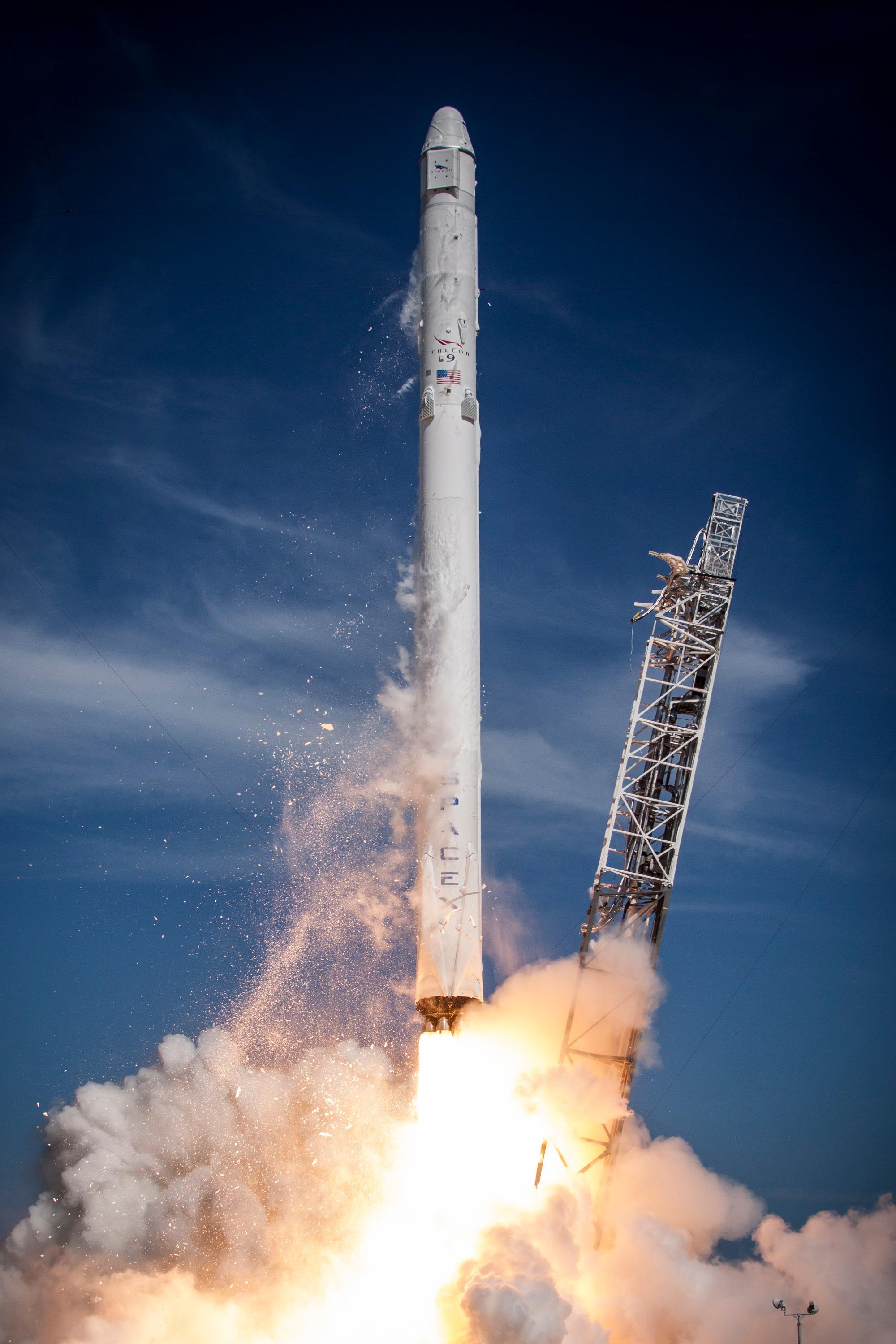
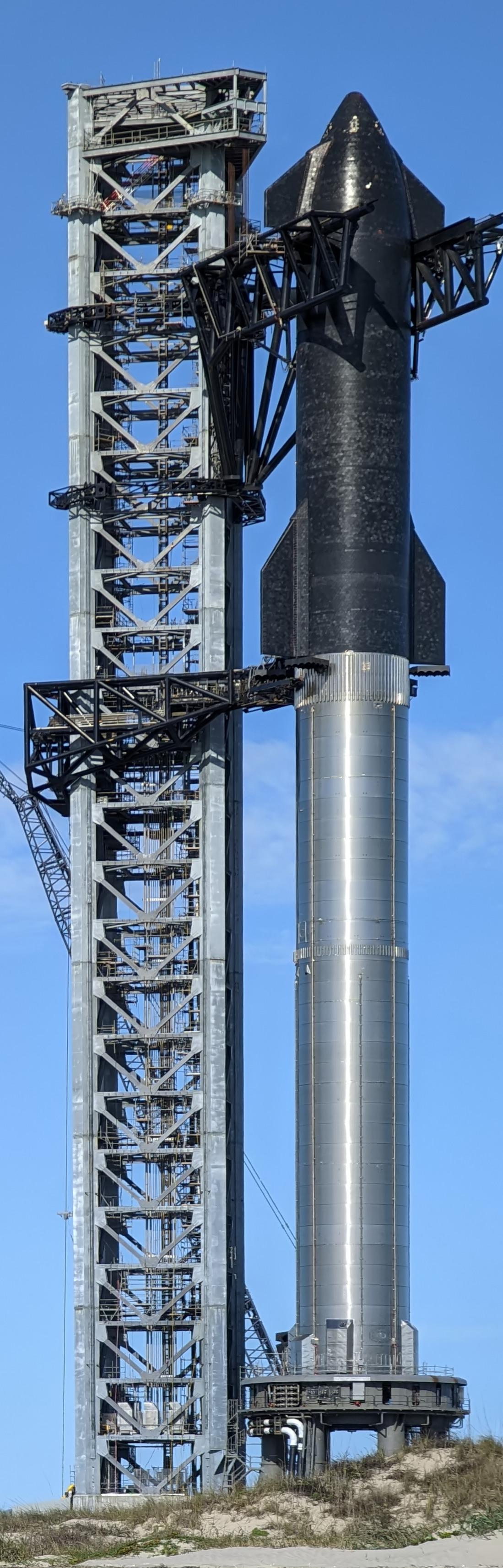
Falcon 9 vs. Starship
The Commercial Workhorse vs. Next-Generation Fully Reusable Megastructure
Starship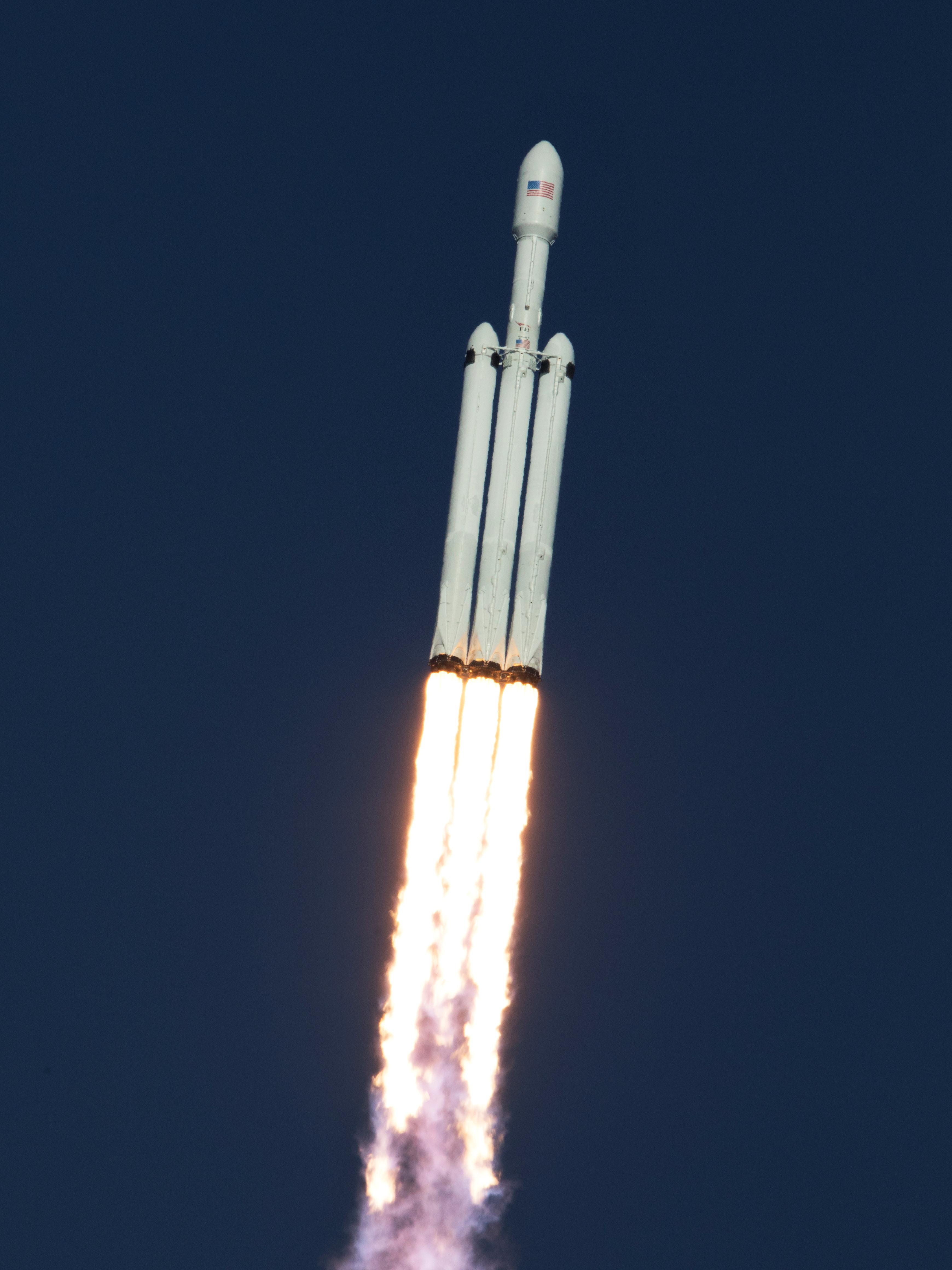 Falcon Heavy
Starship vs. Falcon Heavy
Next-Gen Monolithic Starship vs. Multi-Core Kerolox Heavy Lifter
Falcon 9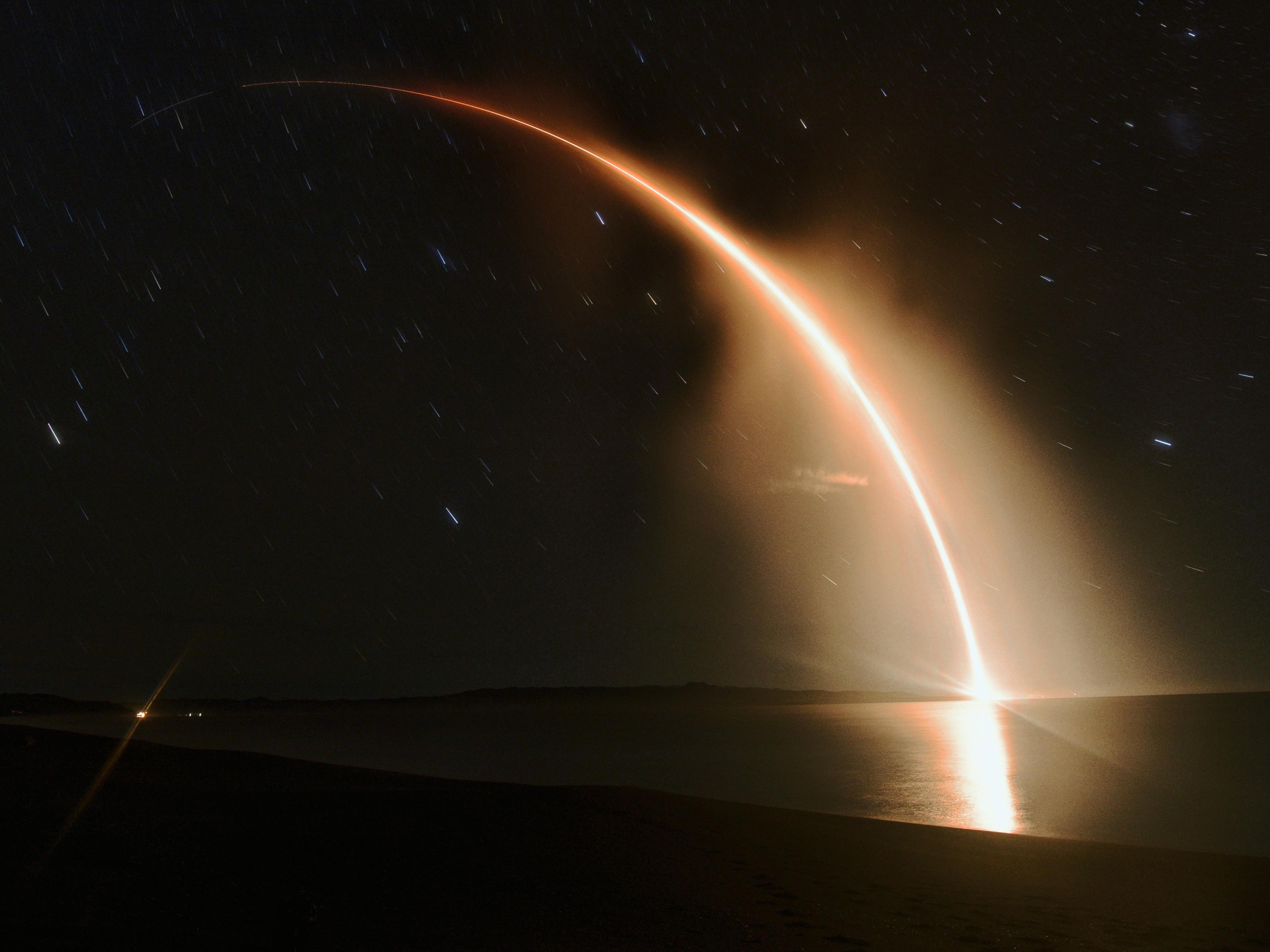 Electron
Falcon 9 vs. Electron
Commercial Rideshare Heavyweight vs. Dedicated Smallsat Precision Launcher
 Ariane 6
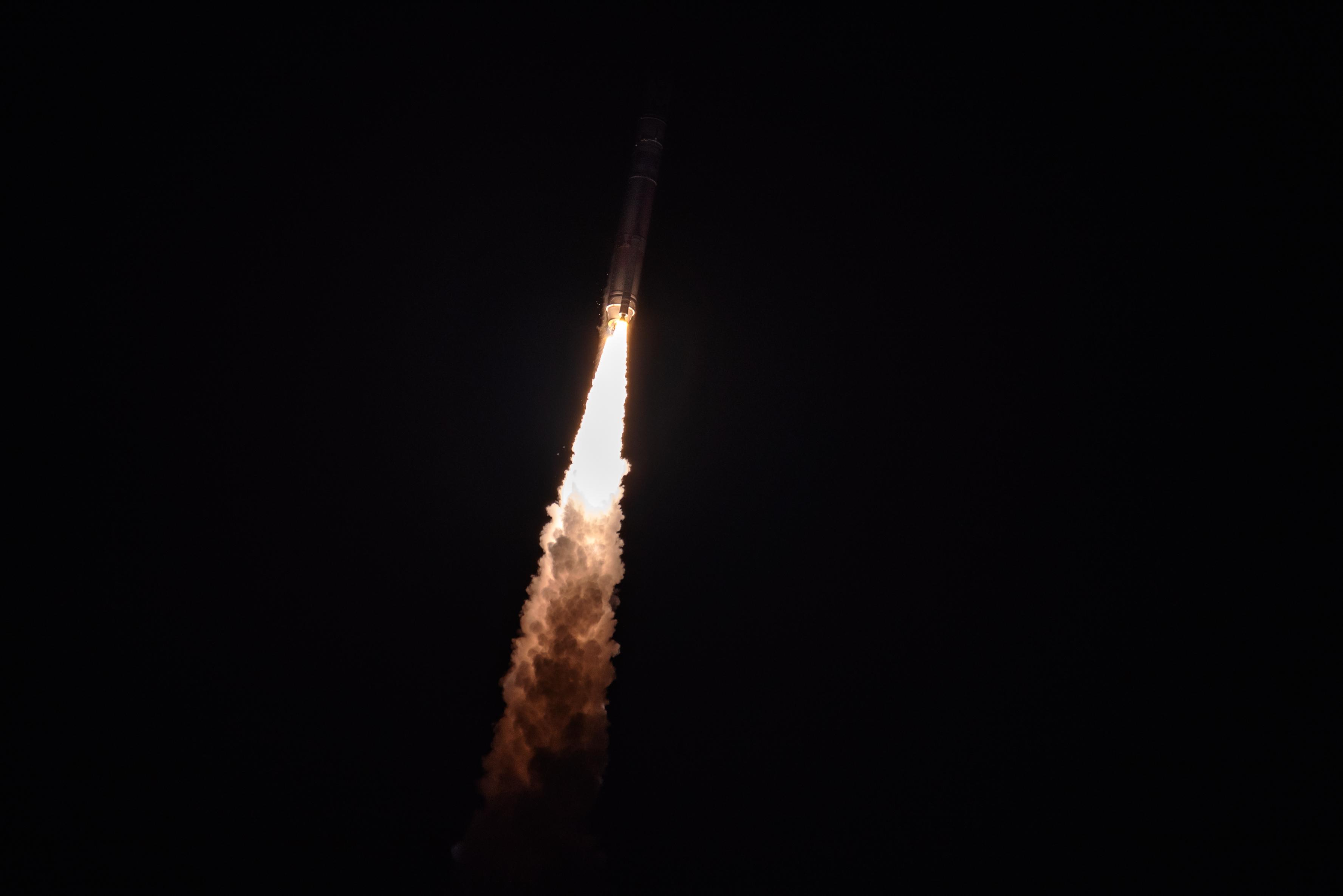 Vulcan Centaur
Ariane 6 vs. Vulcan Centaur
Europe's Sovereign Heavy Launcher vs. America's National Security Workhorse