
SpaceXB1085GO
Falcon 9 Block 5 | Bandwagon 5 (Dedicated Mid-Inclination Rideshare)
Pad: Space Launch Complex 40 · Cape Canaveral SFS, FL, USA
Dedicated rideshare flight to a mid-inclination orbit with dozens of small microsatellites and nanosatellites for commercial and government customers. This launch also carries the second demonstration mission for SpaceX’s Project Starfall, which aims to mass-produce reentry capsules designed to autonomously transport valuable customer experiments and other payloads safely back from space to Earth, including for in-orbit manufacturing. Starfall is a cylindrical shaped capsule approximately 0.75 meters tall with a diameter of 3.1 meters, weighing approximately 2100 kilograms, and capable of carrying 1000 kilograms of payload. It is designed to be carried on Starship flights.
Mission StatusUTC / SYNCED
MISSION WINDOW CONCLUDED
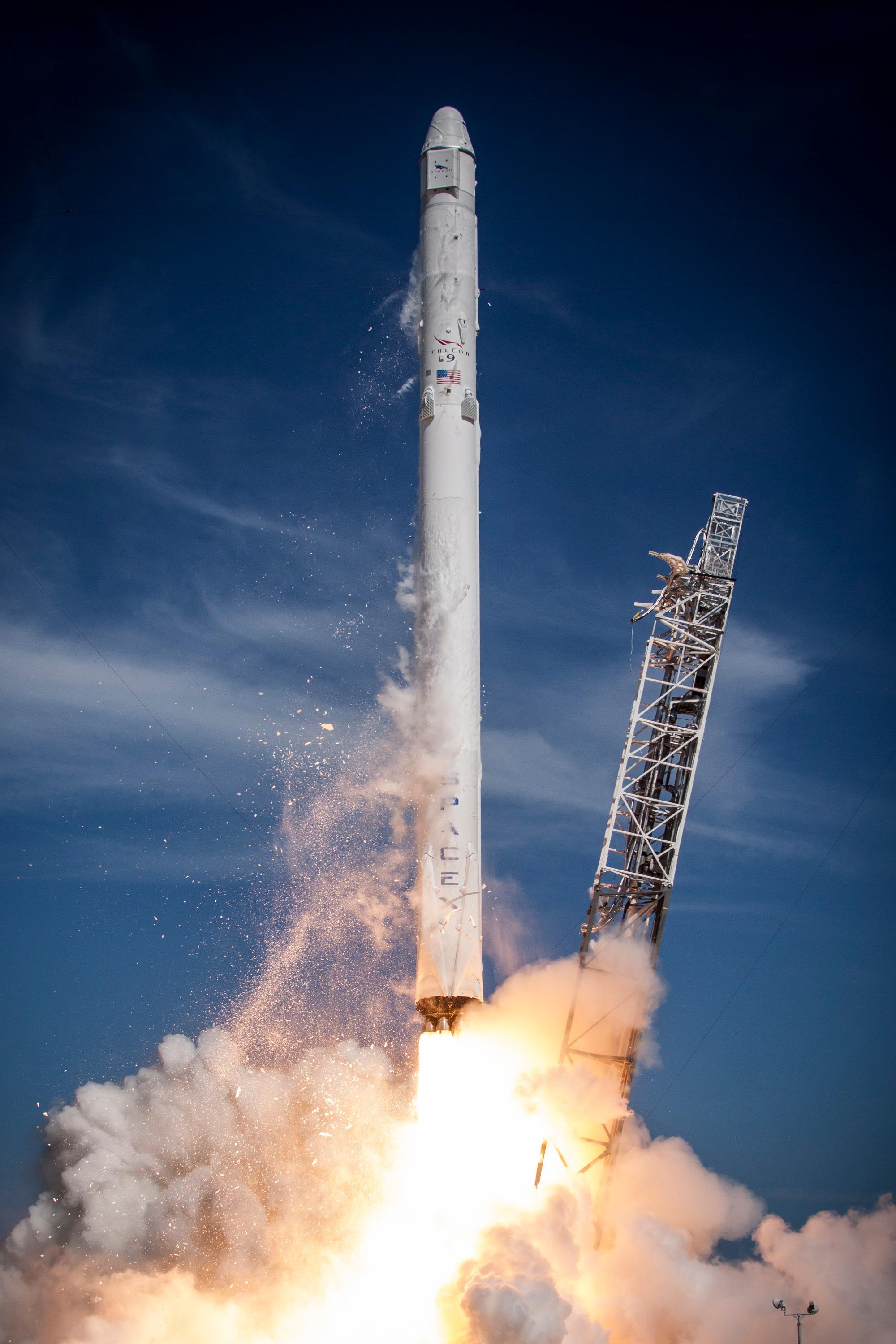
Falcon 9
LiftoffFalcon 9 Liftoff with Dragon Spacecraft
Photo: SpaceX
Get Alerted for Falcon 9 Block 5 | Bandwagon 5 (Dedicated Mid-Inclination Rideshare)
Receive an email alert 1 hour prior to liftoff with live webcast links.
Official Live Launch Webcast
Falcon 9 Block 5 | Bandwagon 5 (Dedicated Mid-Inclination Rideshare) Live Coverage
Official Webcast Feed Scheduled
Live broadcast embeds typically go live 15 to 20 minutes prior to launch window liftoff. Check the official SpaceX channels or Spaceflight Now for live feeds.
Host: SpaceX Flight OpsWindow: Mon, 19 Oct 2026 10:30:00 GMT
Status: GO
🛰️ Mission Orbital & Environment Matrix
- Target Orbit
- LEO
- Target Altitude
- 550 km
- Inclination
- 53.2°
- Weather Violation Risk
- 45%
- Primary Payload
- Bandwagon 5 (Dedicated Mid-Inclination Rideshare)
- Launch Window
- Monday, October 19, 2026 at 10:30 AM UTC – 11:30 AM UTC
♻️ Hardware Reusability & Recovery Matrix
- Booster Core
- B1085
- Flight Count
- Operational Flight
- Recovery Strategy
- Downrange Recovery (TBD)
- Fairing Recovery
- Flight Proven
- Landing Vessel / Zone
- Recovery Vessel / Zone
- Vehicle Architecture
- Falcon 9 Technical Specs & Flight Geometry →
⏱️ Operational Timeline Milestones & Staging Sequence
Target T-0: 2026-10-19Terminal Count
T-00:15:00Autonomous launch sequence start
Auto Sequence
T-00:03:00Flight computer assumes control
Liftoff
T-00:00:00Stage 1 main engine ignition & liftoff
MECO & Stage Sep
T+00:02:40Main engine cut-off and stage separation
Stage 1 Landing
T+00:08:30Booster touchdown on recovery vessel / zone
Payload Deploy
T+00:45:00Spacecraft insertion into target orbit
Launch Complex & Spaceport
Space Launch Complex 40
Cape Canaveral Space Force Station · Cape Canaveral SFS, FL, USA

Launch Mount
ULA Space Launch Complex 41 Launch Mount
United Launch Alliance Space Launch Complex 41 with four 100-meter catenary lightning suppression masts.
Photo Credit: NASA / Kim ShiflettSLC-41 is ULA's primary East Coast heavy launch facility. The pad was the departure point for historic NASA planetary missions including New Horizons to Pluto, the Curiosity and Perseverance Mars rovers, and the OSIRIS-REx asteroid sample return.
Operator
United Launch Alliance (ULA)
Elevation
4 meters (ASL)
Azimuth Range
35°
Flight History
140+ National Security & Planetary Missions
Key Pad Facilities & Ground Support Equipment (GSE)
Vertical Integration Facility (VIF)Tall assembly building where Atlas V and Vulcan rockets are stacked atop mobile launch platforms.
Crew Access Tower (CAT)Dedicated tower providing astronauts entry into the Boeing Starliner capsule.